

Pregnancy changes your body. Back pain, fatigue, anxiety. These show up for most expecting mothers. And by month five, everything feels heavier. But the same strength that gets you through pregnancy is what makes labor easier. Women who strength train during pregnancy have more vaginal deliveries, fewer cesareans, less depression, and less back pain.
Science backs this up. Women who strength train during pregnancy have:
- Higher rates of vaginal delivery
- Lower rates of cesarean birth
- Lower odds of prenatal depression
- Less back pain throughout pregnancy
At Hideout Fitness in Irvine and throughout Orange County, we've worked with dozens of expectant mothers. The ones who strength train feel more confident heading into delivery, have fewer complications, and recover faster. This guide breaks down the research and shows you why a certified prenatal coach makes the difference.
Always consult your obstetrician or healthcare provider before starting any exercise program during pregnancy.
For decades, the message was: rest during pregnancy. That narrative has shifted as evidence accumulates.
Expectant mothers who engage in regular strength training experience measurable improvements across physical, mental, and developmental categories. These reshape the entire pregnancy experience.
The benefits span multiple categories:
Physical Benefits:
- Improved delivery outcomes with fewer complications
- Reduced back pain and pregnancy discomfort
- Better management of pregnancy fatigue
- Stronger pelvic floor function
- Enhanced circulation and fetal development
Mental Health Benefits:
- Reduced risk of prenatal and postpartum depression
- Significantly decreased anxiety during pregnancy
- Improved mood stability throughout pregnancy
- Better sleep quality and overall well-being
- Sense of agency and control during physical changes
Long-Term Benefits:
- Faster postpartum recovery
- Easier return to pre-pregnancy fitness
- Reduced postpartum complications
- Better long-term mental health outcomes
Delivery is intensely physical. Your pelvic floor, core, and leg strength all factor into how your body performs during labor and recovery.
ACOG research shows that exercise is associated with significantly higher incidence of vaginal delivery and significantly lower incidence of cesarean birth. More specifically, a meta-analysis of 16 randomized controlled studies found that prenatal exercise improves the likelihood of normal vaginal delivery by 14% and lowers cesarean delivery by 34%.
Specific Labor Benefits:
- Pilates training reduced labor pain and shortened labor duration by an average of 98 minutes
- Improved ability to manage contractions and push effectively
- Better body positioning and movement during labor
- Faster second stage of labor (pushing phase)
- Fewer instrumental deliveries or interventions needed
Why Prenatal Strength Training Improves Delivery Outcomes

A strong pelvic floor improves body awareness and muscular control exactly when you need it most. Core strength helps your body work efficiently during labor. When your body can move effectively, labor progresses more smoothly and recovery is faster.
For postpartum recovery, this matters tremendously. Vaginal delivery with fewer complications means faster healing, less pain, and quicker return to activities that matter to you. The mechanics of why strength training changes everything apply directly to how your body performs during and recovers from labor.
About 50-70% of expecting mothers experience back pain during pregnancy. It feels inevitable. It's not.
Research shows that prenatal exercise significantly decreased the severity of low back pain during and following pregnancy.
Studies also found that women who exercised had dramatically less back pain than sedentary women.
Why Does Back Pain Happens During Pregnancy?
Shifts in your pelvis, hormones, posture, and weight distribution all contribute to back pain.
Here's what's actually happening:
- Your pelvis shifts and ligaments soften to prepare for delivery
- Your center of gravity changes dramatically as baby grows
- Weight gain (typically 25-35 pounds) stresses your lower back
- Posture shifts to accommodate the growing belly
- Hormonal changes affect muscle stability
How Prenatal Strength Training Prevents Back Pain
Consistent strength training maintains core stability and reinforces proper posture as your center of gravity shifts month by month. Your core acts as a natural support system, taking strain off your lower back and supporting the added weight of pregnancy.
More than 60% of pregnant women experience low back pain due to weight gain and shifts in center of gravity. ACOG's solution: strengthen your core and back muscles. That's exactly what prenatal strength training does.
Managing Pregnancy Fatigue
Pregnancy fatigue stems from hormonal changes and inefficient muscular support. Your body works harder without adequate strength to carry the extra weight.
Prenatal strength training builds the foundation your body needs to carry pregnancy efficiently, preserving energy for what matters.
Women who strength train report:
- More energy throughout the day
- Better sleep quality
- Reduced afternoon fatigue crashes
- Ability to handle daily activities without exhaustion
- Less need to rest during normal routines
Mental Health & Pregnancy
Pregnancy announcements look joyful. The emotional reality is more complex.
- Roughly 1 in 5 expecting mothers experience anxiety during pregnancy, with rates climbing as delivery approaches.
- Postpartum depression is also a common struggle, and it's real. It affects about 1 in 7 new mothers and stems from hormonal shifts, major life changes, and the stress of early parenthood. Not weakness or failure.
- Exercise cuts prenatal depression risk by about two-thirds. Research consistently shows that pregnant women who stay active have better mental health outcomes postpartum. Less depression, lower anxiety.
Why It Matters
Physical strength builds mental resilience. During pregnancy, that sense of control, knowing your body can handle labor, matters deeply. That foundation carries through postpartum recovery, which is why our clients continue into postpartum workout planning and recovery guidance designed to support both healing and mental health in those early months.
At Hideout Fitness, our coaches support your mental health journey through prenatal training. We create structure, accountability, and community; all proven to help during pregnancy. If you're struggling with anxiety or depression, work with your doctor alongside your fitness plan. Both matter.
Yes, ACOG confirms exercise is safe for healthy pregnancies. Stop immediately if you experience these symptoms.
Warning Signs to Stop Exercise Immediately (per ACOG):
- Vaginal bleeding
- Abdominal pain
- Regular painful contractions
- Amniotic fluid leakage
- Shortness of breath before exertion
- Dizziness, headache, or chest pain
- Calf pain or swelling
- Muscle weakness affecting balance
How Your Training Adapts Through Pregnancy
First Trimester
- Exercise similar to pre-pregnancy training
- Morning sickness may reduce motivation and energy
- Fatigue is normal; dial back intensity
- Focus on comfort and safety
Second Trimester
- Energy returns, belly grows noticeably
- Best time for building strength gains
- Avoid heavy lifts that compress abdomen
- Focus on movements that feel good
Third Trimester
- Center of gravity shifts more
- Certain positions become uncomfortable
- Maintain strength, prep pelvic floor
- Prioritize labor preparation movements
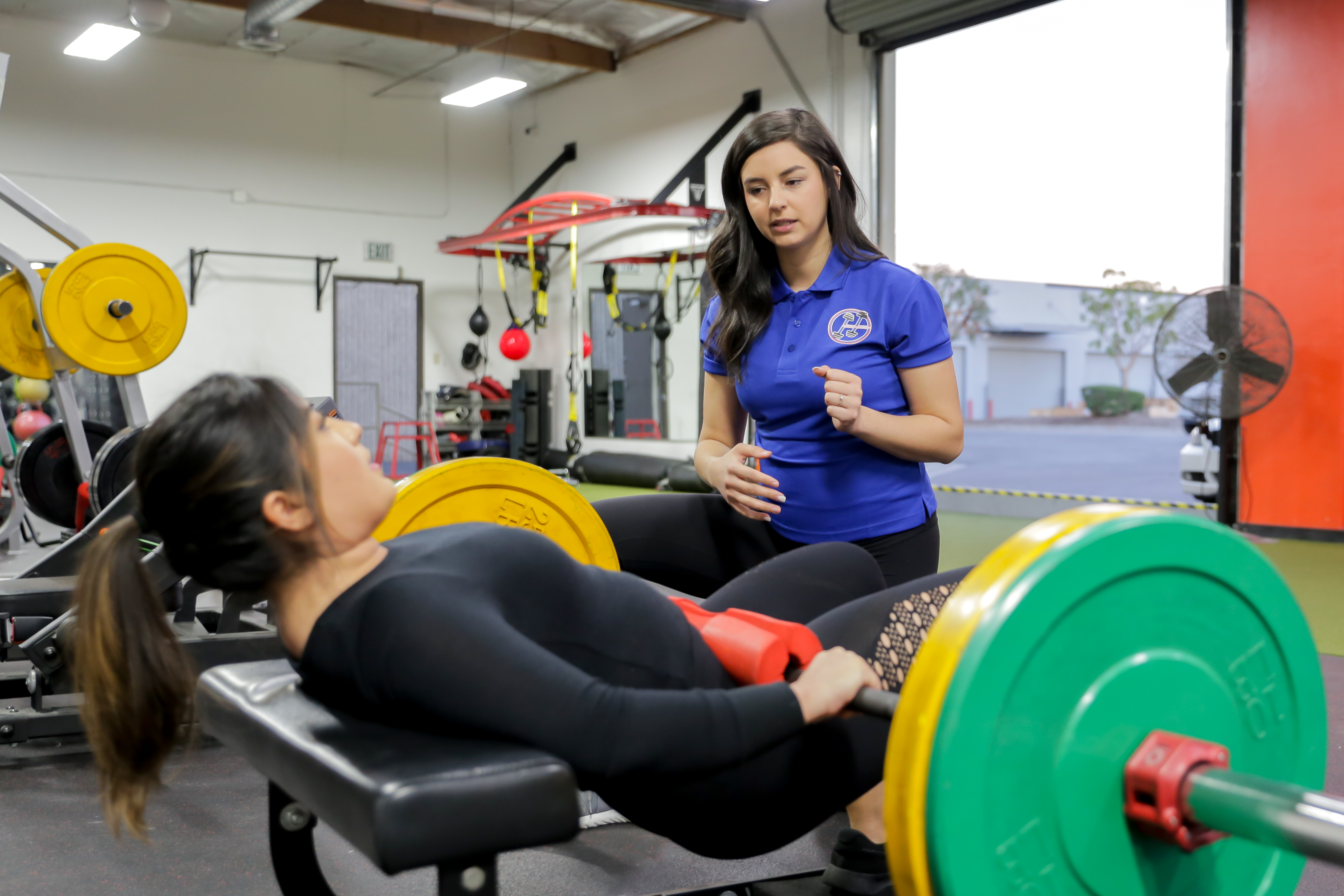
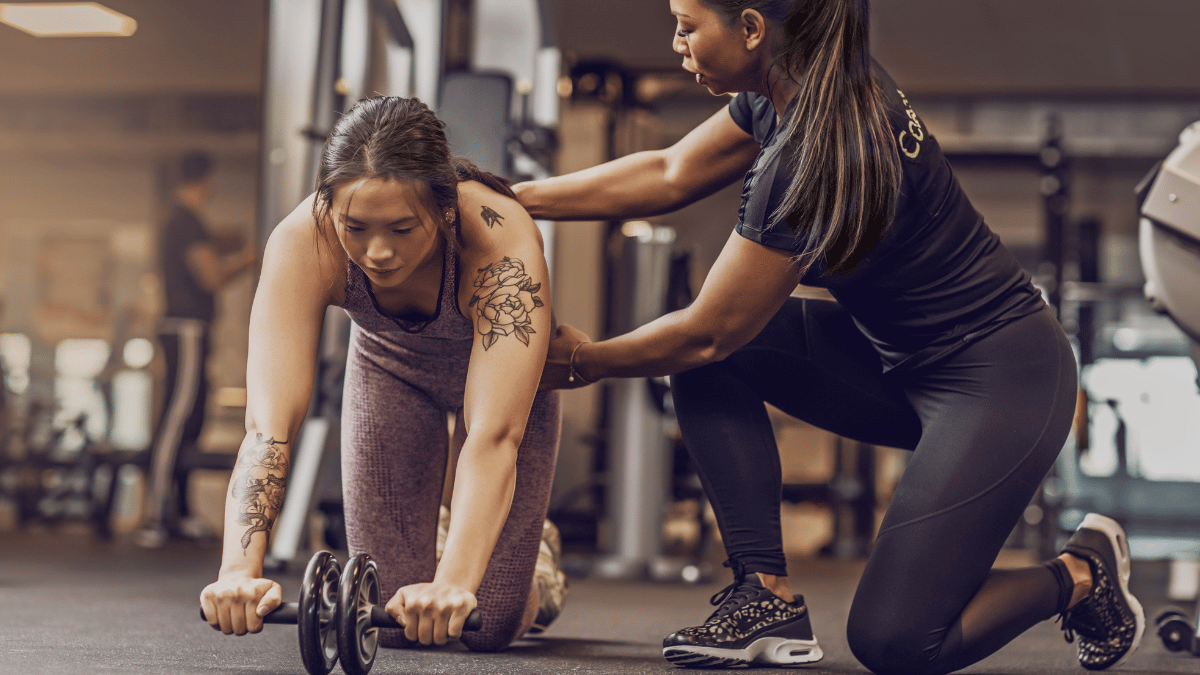
A certified prenatal coach understands these changes month by month and adjusts your program based on how you're feeling that day.
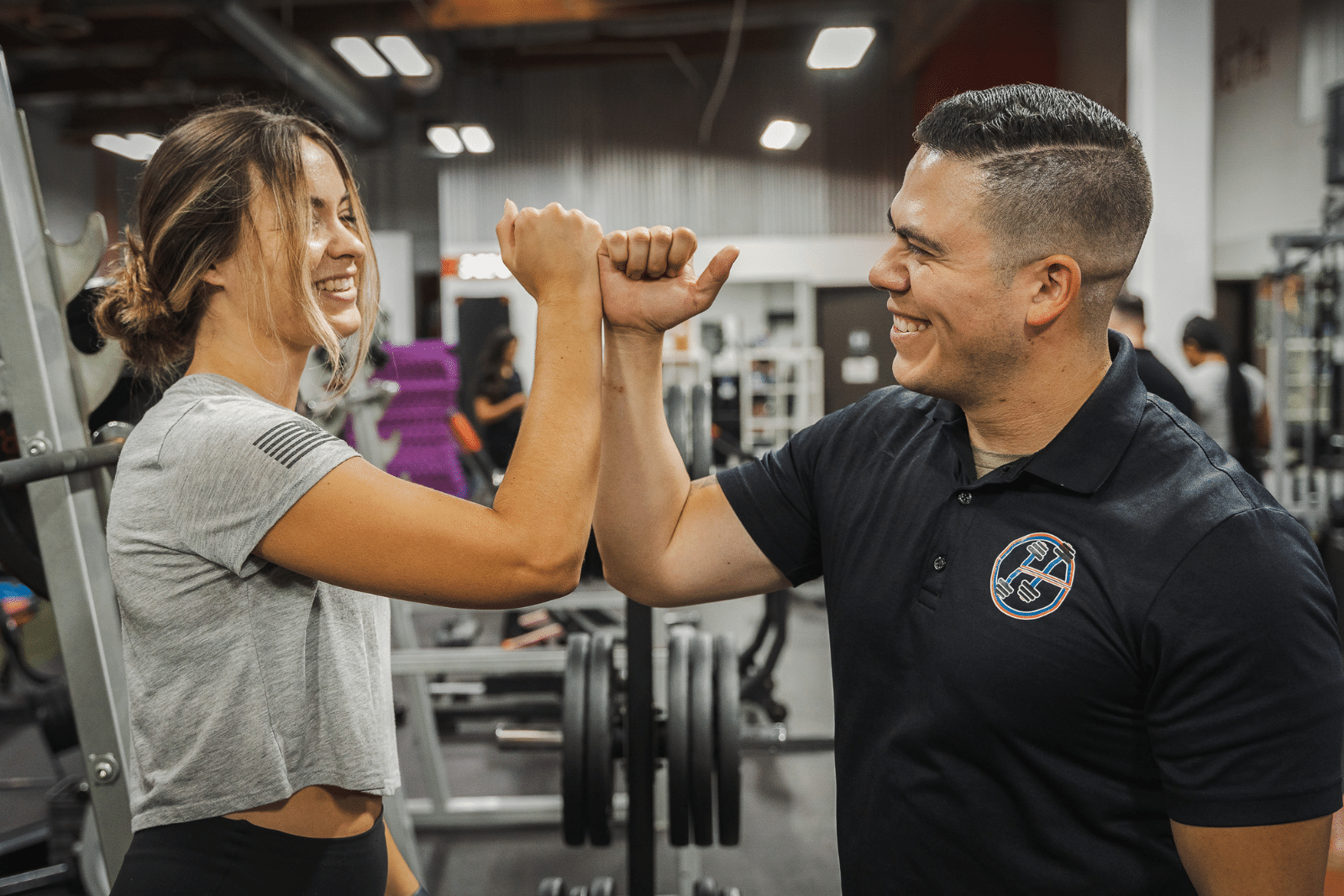
At Hideout Fitness in Irvine, Newport Beach, Costa Mesa, and Tustin, Coach Chay (CSCS) and Coach Emily (CES Prenatal/Postpartum Certified) specialize in prenatal and postpartum training.
They build programs that manage back pain, prepare your body for delivery, and support your mental health through pregnancy. After birth, they guide you through postpartum recovery and help you return to fitness safely, including our approach to managing baby weight loss.
Meet Your Orange County Prenatal & Postnatal Coaches
.png)
Coach Chay brings a science-backed approach to prenatal training. With a degree in Kinesiology and credentials in strength conditioning, nutrition, and women's fitness, he understands how your body changes through pregnancy. He designs programs that build strength safely while adapting to each trimester.
"Strength training is about building what you need to get through labor and recover after. I work with moms across Orange County, and the ones who stick with it always feel more prepared for delivery." — Coach Chay
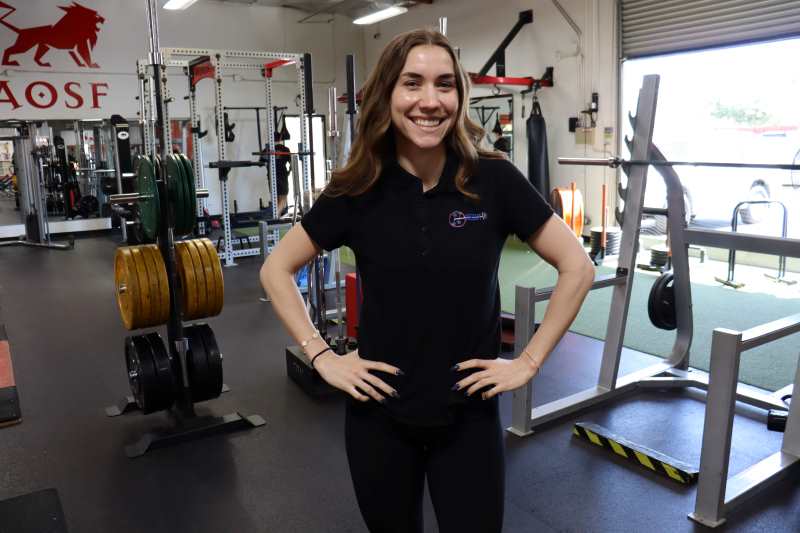
Coach Emily specializes in prenatal and postpartum training with deep experience in weightlifting and strength development. She's passionate about building confidence and lasting health. Emily guides you through every stage of pregnancy, adjusting your program based on how you're feeling and what your body needs.
"Your body can do way more than you think. I've trained dozens of moms in our community, and every single one who strength trains has easier labors and faster recoveries. That confidence doesn't go away." — Coach Emily


.jpg)
.jpg)






.png)














.png)




.png)
.png)
.png)