

You're a few months postpartum. You're moving more, eating better, and doing everything you're supposed to do. But that belly just won't budge. Sound familiar? Here's what most people don't tell you: postpartum belly isn't just fat. It's a combination of things happening inside your body that no amount of crunches or cardio will fix on its own. And if you don't know what you're actually dealing with, you'll keep spinning your wheels.
Let's break it down.
Why Postpartum Belly Fat Is Not the Same as Regular Belly Fat
Regular belly fat responds to a calorie deficit and exercise. Postpartum belly is more complicated. It’s not your fault, it's just biology. A few things are happening at once.
Hormones are working against you
During and after pregnancy, your body produces higher levels of certain hormones that directly affect where you store fat. One of the big ones is cortisol, your body's stress hormone. When cortisol is elevated, your body holds onto fat, especially around the belly.
Add in the sleep deprivation that comes with a newborn, and cortisol goes even higher. Your body essentially reads exhaustion as a threat and responds by clinging to fat reserves.
Diastasis recti is making it look worse
Diastasis recti (say it: die-uh-stay-sis rek-tie) is when your abdominal muscles separate during pregnancy to make room for your growing baby.
Think of your abs like two columns running down the middle of your stomach. During pregnancy, those columns get pushed apart. Pregnancy hormones cause the connective tissue holding those muscles together to soften and loosen, which is what allows the separation to happen.
In many cases, those muscles don't fully come back together after birth, leaving a gap that causes the belly to protrude outward.
Here's the key point: a lot of what looks like belly fat is actually this muscle gap, causing your midsection to poke forward. You could lose 10 pounds and still have the belly pooch if this isn't addressed.
Here's what's actually going on under the surface:
- Stress hormones from sleep deprivation tell your body to store fat around the belly
- The abdominal muscles have separated and aren't supporting your midsection properly
- The deep core muscles (the ones that act like a natural corset) are weakened and not doing their job
- All of this together makes the belly look bigger and feel softer than it actually is
Why Crunches and Cardio Won't Get Rid of Postpartum Belly Fat
This is where a lot of new moms go wrong, and it's completely understandable. You want to target the belly, so you do ab exercises. The problem is that exercises like crunches and sit-ups push your abdominals outward, which can actually widen the muscle separation instead of closing it. You're making the problem worse while thinking you're fixing it.
The problem with the typical postpartum approach:
- Crunches and sit-ups push the abs outward and worsen the muscle separation
- Too much cardio raises your stress hormones further, encouraging your body to hold onto belly fat
- Generic workout programs don't account for muscle separation or pelvic floor issues
- Jumping straight back into pre-pregnancy training ignores what your body actually needs right now
Why Strength Training Is the Best Way to Lose Postpartum Belly Fat
Strength training works differently. And for the postpartum belly specifically, it works better.
It rebuilds the core from the inside out
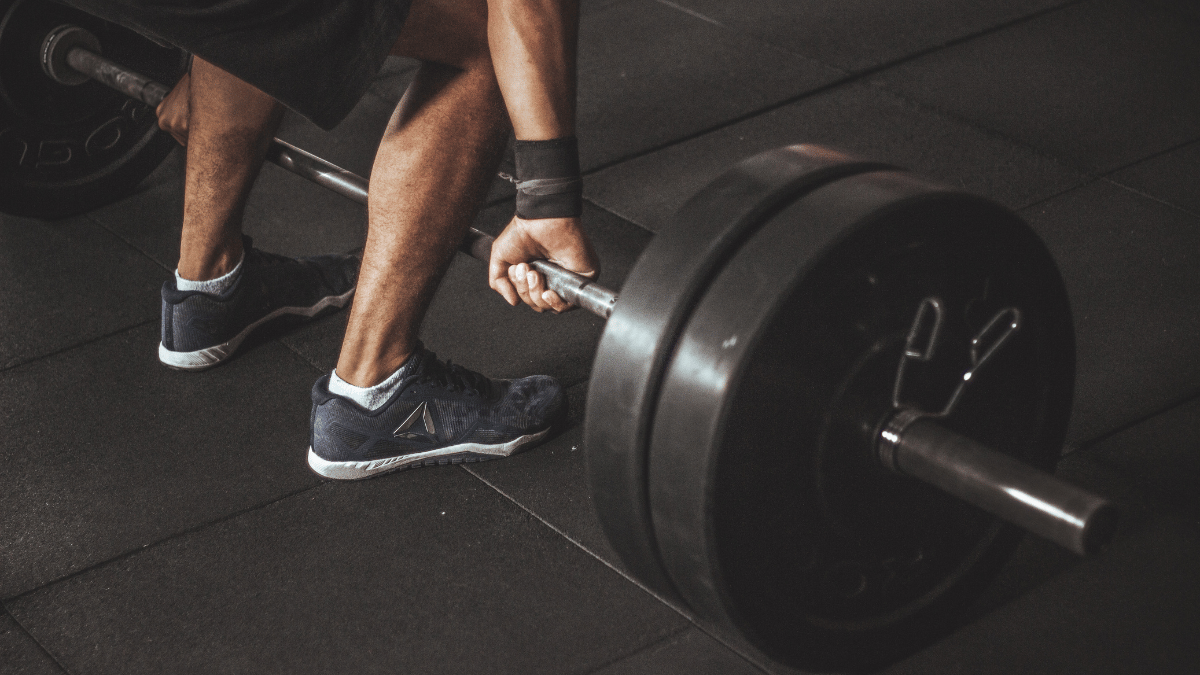
The right postnatal strength training doesn't start with heavy lifts. It starts with reactivating the deep core, the layer of muscle underneath your abs that acts like a built-in support system for your entire midsection.
Think of it as rebuilding the foundation before adding floors to a house. Targeted abdominal exercise programs have been shown to be effective in treating muscle separation at various stages of the postpartum period, but only when the right exercises are done in the right sequence.
This is something we explore in depth in our guide on why strength training changes everything.
It boosts your metabolism
Every pound of muscle you build burns more calories around the clock, even when you're sitting on the couch. For new moms dealing with a metabolism that's been disrupted by pregnancy, hormonal shifts, and sleep deprivation, building lean muscle is one of the most effective long-term strategies for getting rid of belly fat.
It actually fixes the problem instead of masking it
Here's what a well-designed postnatal strength program does that nothing else does:
- Closes the abdominal muscle separation through proper core reactivation
- Restores the pelvic floor muscles: the group of muscles at the base of your pelvis that support your bladder, bowel, and uterus
- Rebuilds stabilizer muscles throughout the hips, back, and core
- Improves posture, which on its own makes the belly appear flatter and more supported
- Creates sustainable fat loss through increased lean muscle
Why New Moms in Orange County Need a Postnatal Personal Trainer
Here's the honest truth: most new moms have no idea they have abdominal separation. They don't know which exercises are safe and which ones are silently making things worse. And they don't have the time or energy to research all of this while running on broken sleep and caring for a newborn.
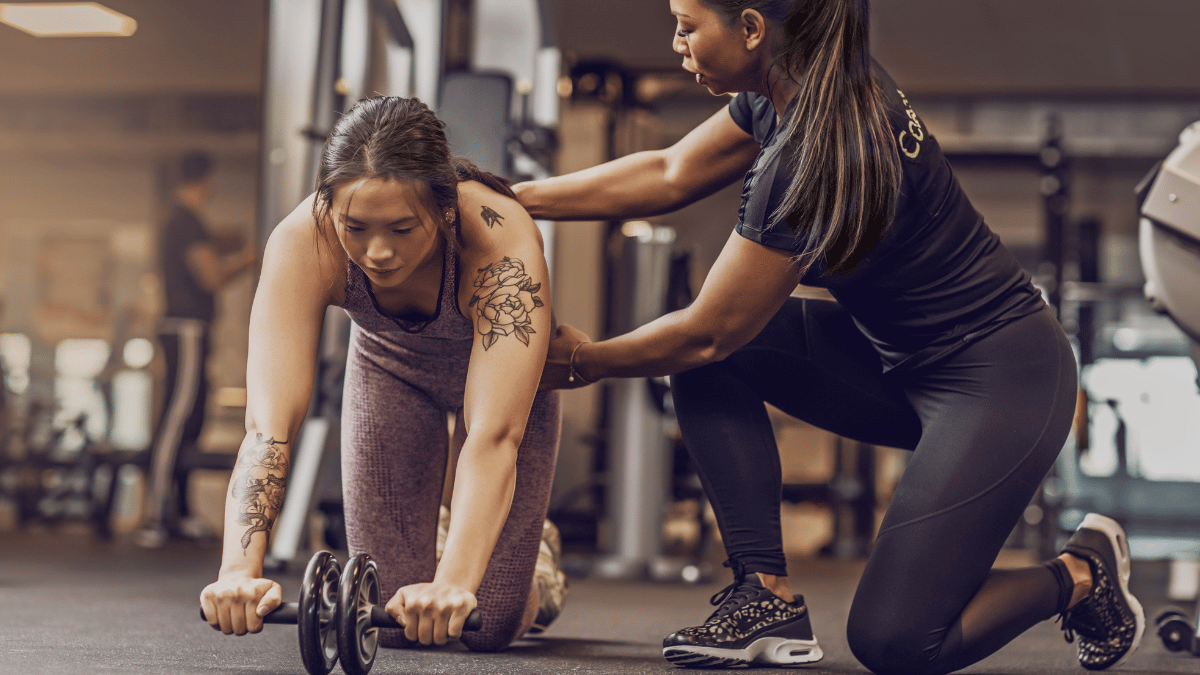
A postnatal-certified personal trainer:
- Checks for abdominal muscle separation before you do a single exercise
- Builds a program specifically around your current stage of recovery
- Teaches you which movements are safe and which ones to avoid right now
- Progresses your training gradually so you never take two steps back
- Keeps you accountable during one of the most demanding seasons of your life
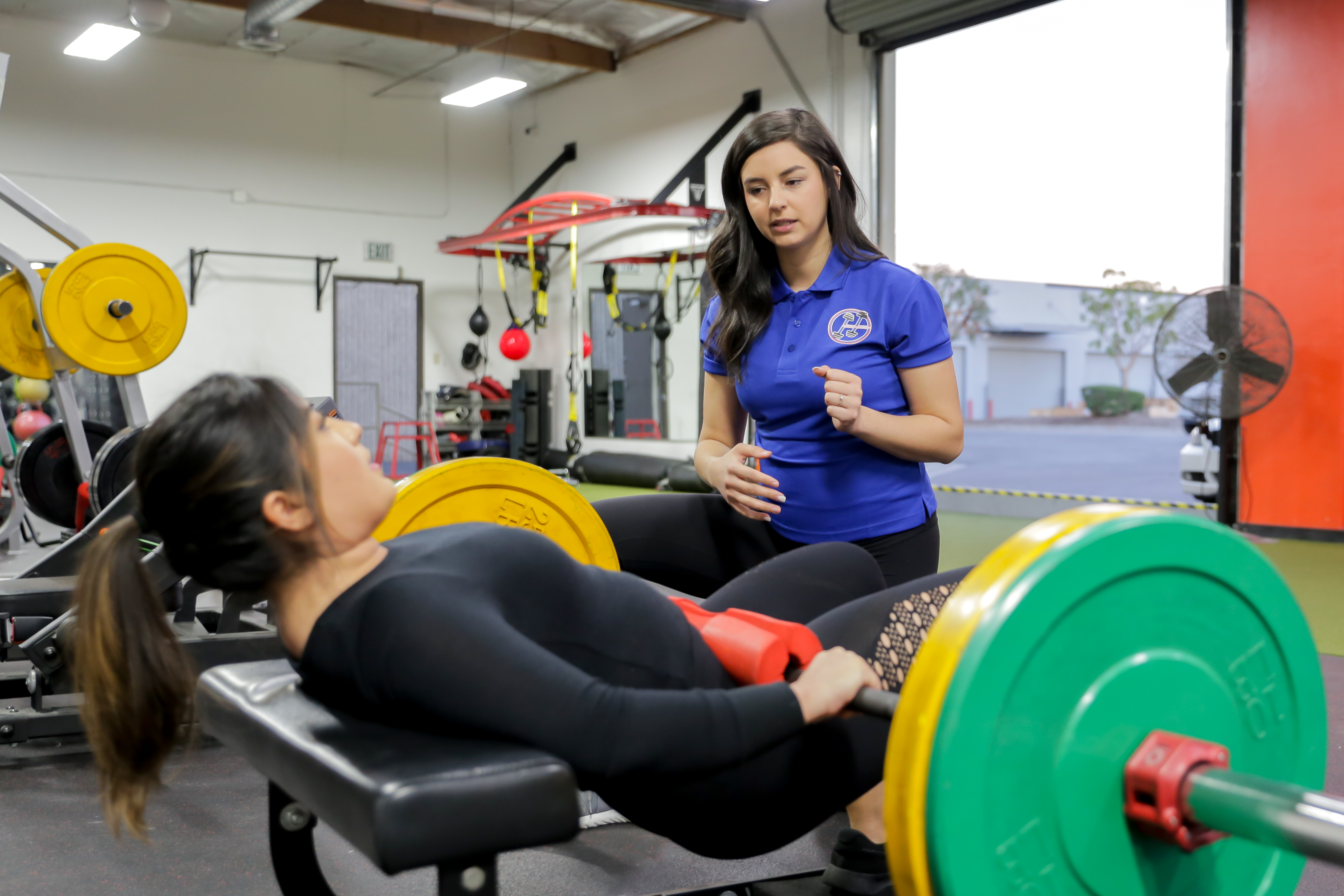
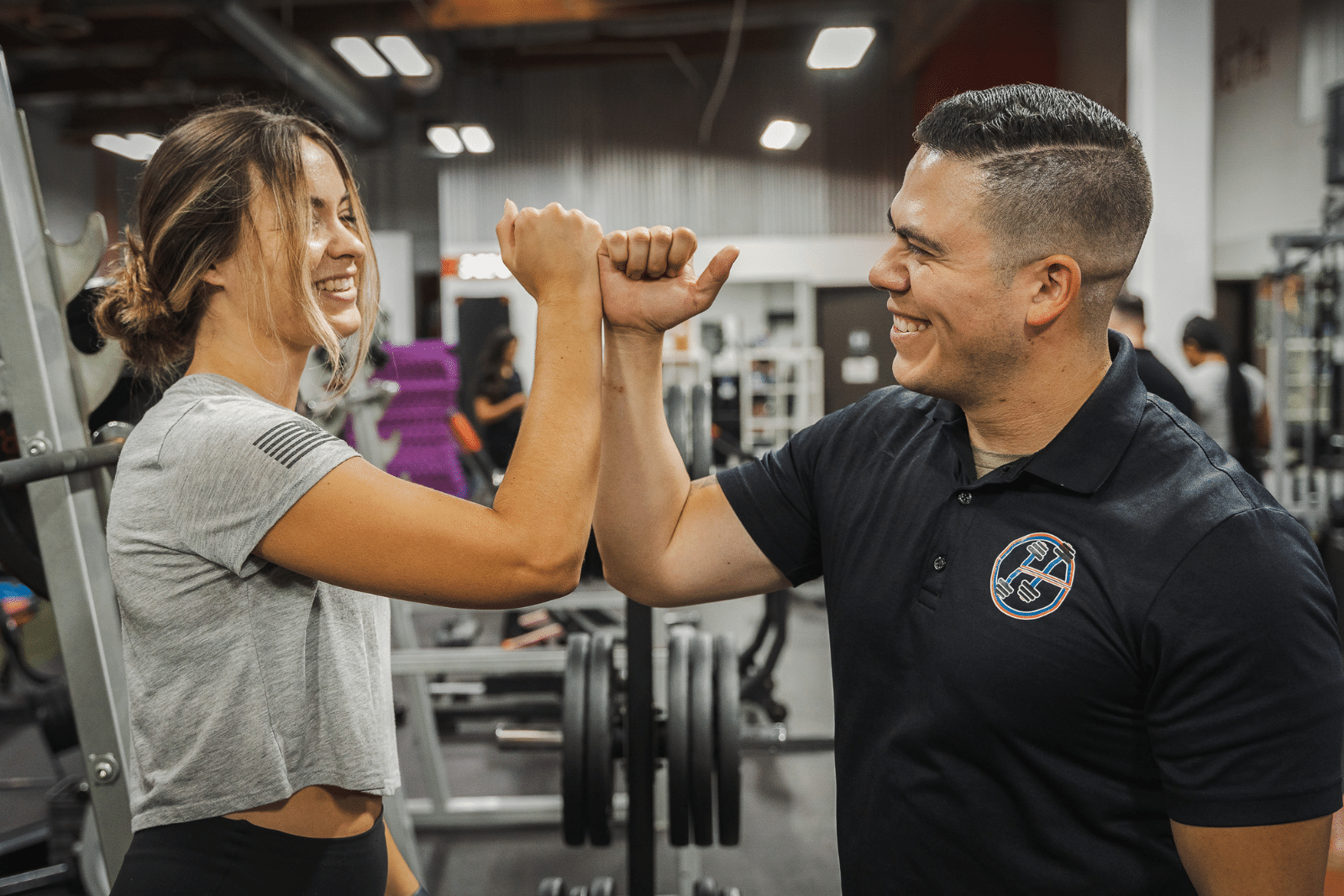
At Hideout Fitness, Coach Chay and Coach Emily work with new moms across Orange County every day.
Coach Chay holds a degree in Kinesiology, the science of how the human body moves, along with certifications in strength, conditioning, and women's fitness.
Coach Emily is a Prenatal/Postpartum Certified trainer with seven years of weightlifting experience and a genuine passion for helping new moms rebuild confidence and strength that lasts.
They've worked with dozens of moms throughout Irvine, Newport Beach, Tustin, and Costa Mesa, and they know exactly what postpartum bodies need. You can read more about what training with them looks like in our full guide on postnatal personal training at Hideout Fitness.
When Can New Moms Start Strength Training After Giving Birth?
You don't need to wait until you feel "ready." But you do need to start smart.
Here's the right order of operations:
- Get medical clearance from your OB-GYN first, always
- Book a movement assessment with a postnatal-certified trainer
- Get checked for abdominal muscle separation before starting any ab work
- Begin with deep core reactivation and pelvic floor work
- Gradually build up to loaded strength movements over time
If you're still pregnant and want to get ahead of this whole process, our prenatal strength training guide walks you through how to train safely before delivery, which makes coming back postpartum a whole lot smoother.
Start Your Postpartum Strength Training Journey at Hideout Fitness
Postpartum belly isn't something you fix by working harder. It's something you fix by working smarter: with the right exercises, in the right order, guided by someone who actually understands what your body has been through.
New moms in Irvine, Newport Beach, Costa Mesa, and Tustin, we're here for you at Hideout Fitness. Coach Chay and Coach Emily are ready to help you build something that actually lasts.

.jpg)
.jpg)






.png)














.png)


.png)




.png)
.png)
.png)

